When Trust Fails: The Digital Security Crisis No One Saw Coming
Imagine losing $100 million in 10 minutes. Not from a sophisticated hack involving months of planning. Not from a zero-day exploit or advanced malware. But from a single phone call.
That’s exactly what happened to MGM Resorts in September 2023. And it’s just one example of a much larger crisis that’s unfolding across the digital landscape—a crisis where the very foundations of security are crumbling beneath our feet.
The Uncomfortable Truth
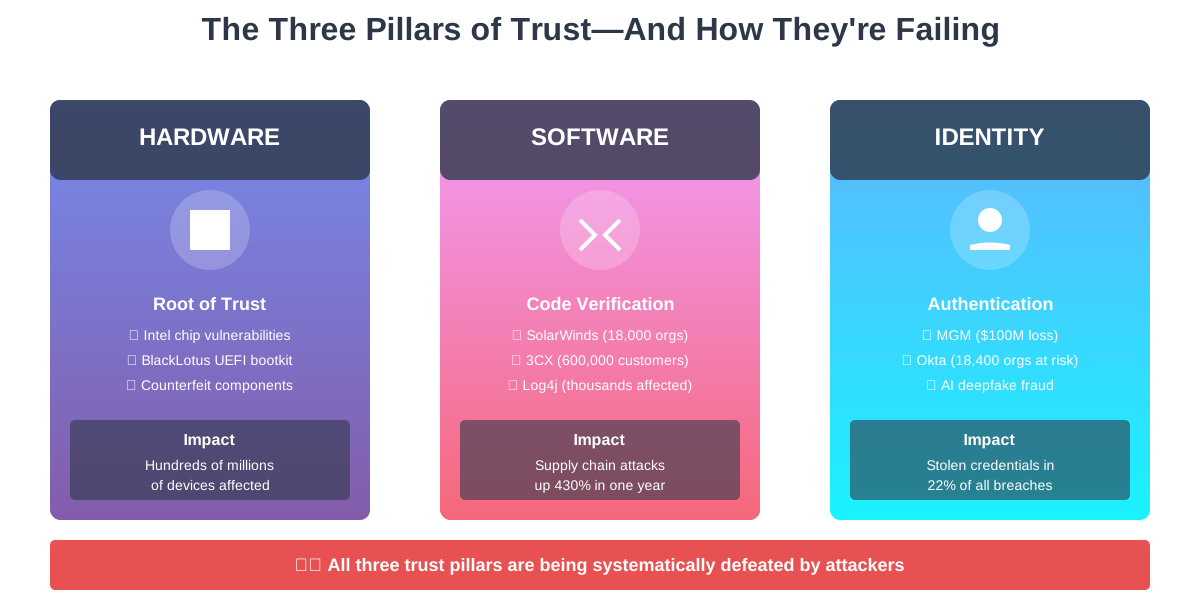
For decades, we’ve built our digital security on three seemingly solid pillars: hardware providing a “root of trust,” software verification through code signing, and identity systems proving you are who you say you are.
Here’s the problem: Between 2020 and 2025, every single one of these pillars suffered catastrophic, publicly documented failures.
We’re not talking about theoretical vulnerabilities that security researchers discuss at conferences. We’re talking about real breaches that have cost organizations over $40 billion globally, exposed 500+ million individuals, and even driven companies into bankruptcy.
When Hardware Becomes Your Permanent Weakness
Let’s start with the most unsettling failure: hardware vulnerabilities that cannot be fixed.
In March 2020, security researchers discovered a flaw in Intel’s chipsets that affects hundreds of millions of computers worldwide. The vulnerability sits in the boot ROM—the read-only memory that initializes your computer before any other software runs. Because it’s literally burned into the silicon, it cannot be patched with software updates.
According to Positive Technologies, the researchers who discovered it, this vulnerability is “impossible to detect” and affects all Intel chipsets from the last five years prior to 10th generation processors. Think about what that means: enterprise servers, government computers, personal laptops—all sitting with a permanent security flaw at their very core.
“Utter chaos will reign when extraction methods become widespread.”— Positive Technologies Security Research
But it gets worse. In 2023, a piece of malware called BlackLotus became the first publicly known threat to bypass Windows 11’s Secure Boot—the very feature designed to prevent malicious software from loading during startup. This wasn’t a nation-state exclusive tool. It sold on underground forums for just $5,000, putting sophisticated firmware-level attacks within reach of common criminals.
The NSA was so concerned they issued emergency mitigation guidance. Microsoft patched the vulnerability but warned that the fix could break existing systems. And here’s the kicker: once infected, traditional antivirus software cannot detect or remove it. It operates below the level where your security tools can see.
Software You Trust, Weaponized Against You
If hardware vulnerabilities are concerning, software supply chain attacks are terrifying—because they weaponize the trust you place in legitimate software.
The SolarWinds breach remains the textbook example of how devastating this can be. Between September 2019 and December 2020, Russian intelligence services infiltrated SolarWinds’ development environment and injected malware into their Orion software updates. The malware was digitally signed with a valid SolarWinds certificate and distributed through official channels.
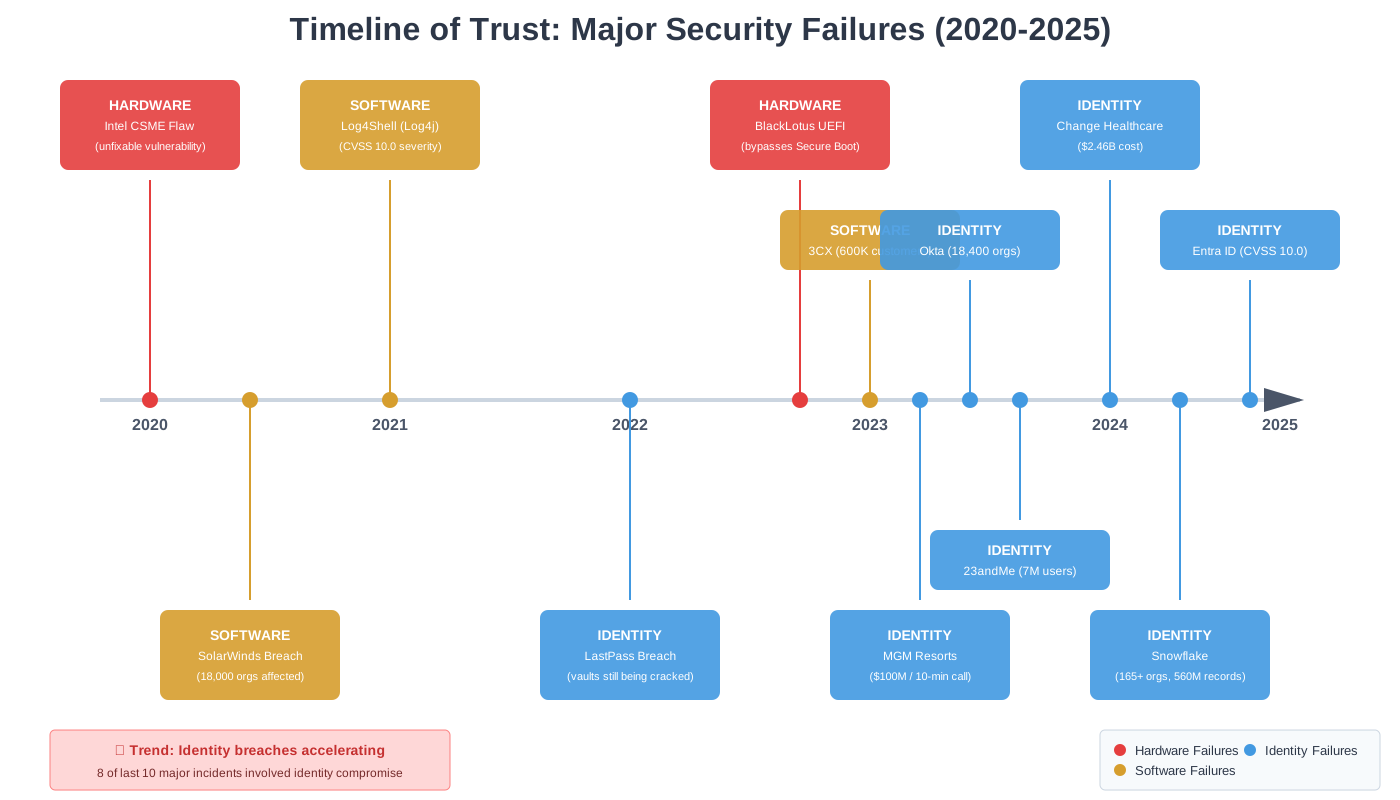
Approximately 18,000 organizations received compromised updates. The U.S. Treasury, Department of Homeland Security, and major corporations like FireEye and Microsoft were compromised. The Government Accountability Office estimated costs at $12 million per affected organization. The incident was so severe it led to Executive Order 14028, fundamentally reshaping federal cybersecurity requirements.
The critical lesson? Digital signatures alone mean nothing if the signing process itself is compromised. We trusted the signature. The attackers knew we would. And they exploited that blind trust systematically.
Then there’s Log4j—the vulnerability that security professionals will be talking about for decades. Discovered in November 2021, this flaw existed undetected in the Apache Log4j library since 2013. The library is embedded in thousands of products from hundreds of vendors.
CISA Director Jen Easterly called it “one of the most serious [vulnerabilities] I’ve seen in my entire career, if not the most serious.” Within days, half of all corporate networks globally were being actively probed. Google estimated 35,000+ Java packages were affected. The worldwide patching effort cost billions.
“This is a true cyber-pandemic with incalculable potential damage.”— Check Point Security Research
The Federal Trade Commission took the unprecedented step of announcing they would pursue companies that failed to patch Log4j, signaling a regulatory shift toward holding organizations accountable for security negligence.
Identity: When “You” Isn’t Really You
Identity and authentication failures have become the dominant breach vector—and the methods are evolving faster than our defenses.
Let’s return to that MGM Resorts story. In September 2023, attackers from the Scattered Spider group spent 10 minutes on LinkedIn researching MGM employees. They identified someone with elevated privileges, called the IT help desk pretending to be that employee, and convinced the help desk to reset both the password and multi-factor authentication.
Ten minutes. One phone call. $100 million in damages.
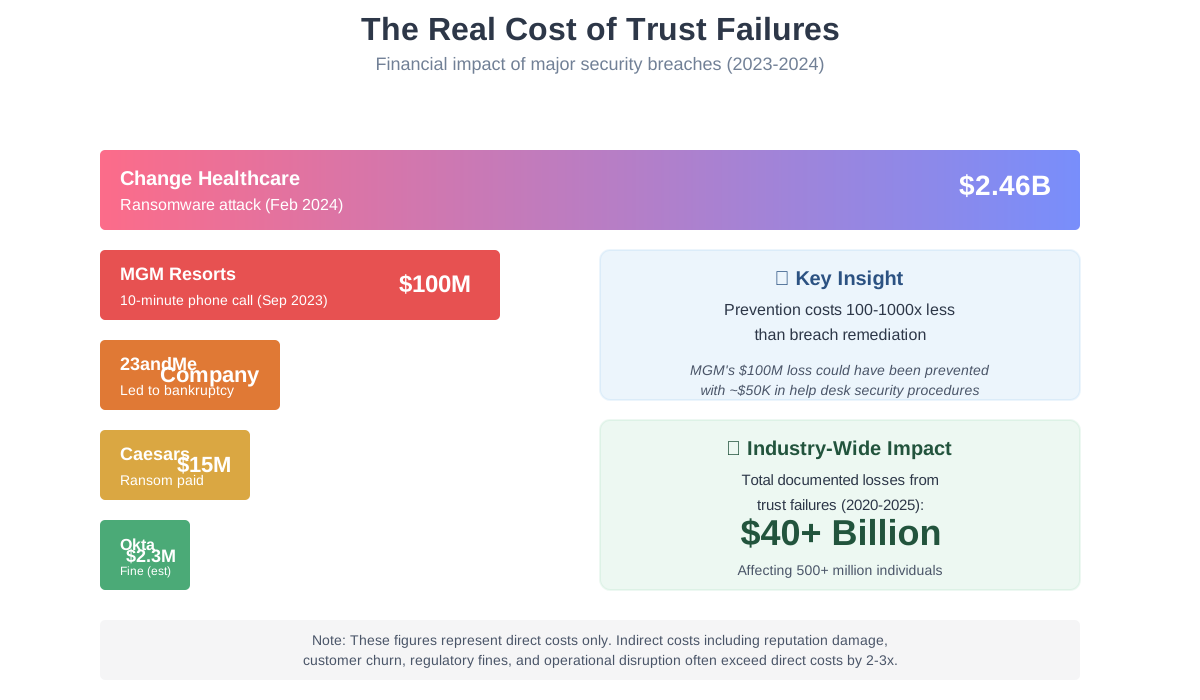
They disrupted operations across 30+ MGM properties for 10 days. Slot machines stopped working. Digital room keys failed. Reservation systems went down. Payments and ATMs were offline. MGM lost $84 million in revenue and spent $10 million on consulting and legal fees.
The scary part? MGM had multi-factor authentication. But social engineering bypassed it at the help desk level. Technical controls are only as strong as the humans operating them.
Caesars Entertainment faced a similar attack during the same period. They made a different calculation: pay the $15 million ransom. Two casinos, same vulnerability, different risk decisions—but both lost massive amounts because of inadequate help desk security procedures.
The AI Revolution in Fraud
If social engineering wasn’t concerning enough, artificial intelligence has introduced an entirely new threat category.
In October 2024, researchers discovered ProKYC—an AI-powered tool that generates completely synthetic identities with matching documents for a $629 annual subscription. It successfully bypassed Bybit cryptocurrency exchange’s Know Your Customer verification, including biometric checks.
Think about that. For less than the cost of a good laptop, criminals can now create fake identities that pass verification systems designed to detect fraud. The package includes camera spoofing, virtual emulation, facial animation, fingerprints, and verification photos—everything needed to defeat biometric identity verification.
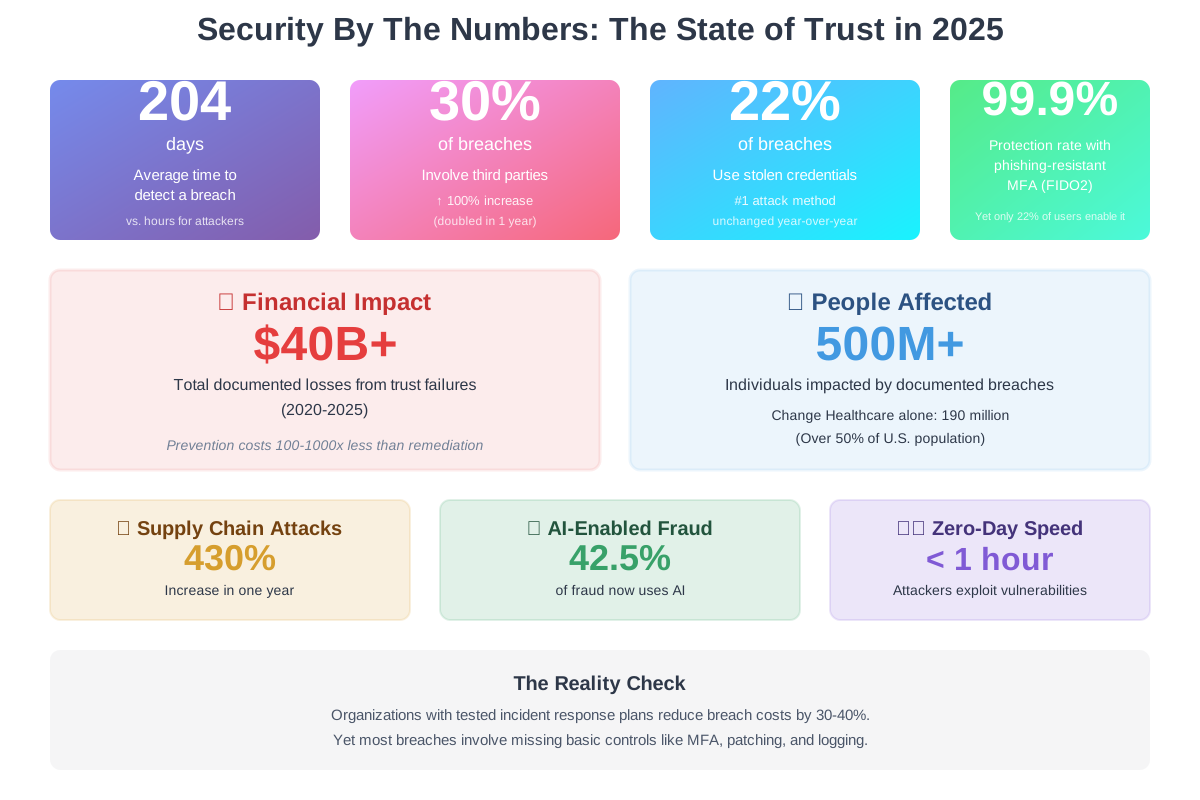
Signicat research found that 42.5% of fraud attempts now use AI, with 29% successfully breaching defenses. The Financial Services Information Sharing and Analysis Center estimates $40 billion in losses by 2027 from AI-enabled fraud, up from $12.3 billion in 2023.
A Hong Kong company lost $25 million in 2024 when fraudsters hosted a video meeting with deepfaked company executives, convincing an employee to transfer funds. The employee saw their executives on video, heard their voices, and still got fooled.
The Cascading Effect: When One Failure Becomes Thousands
Change Healthcare represents the largest healthcare breach in U.S. history—and a perfect example of how single point failures cascade through entire industries.
In February 2024, the AlphV/BlackCat ransomware group exploited Change Healthcare’s lack of multi-factor authentication on externally-facing systems. One username and password provided complete access to a system that processes one in three patient records and handles $1.5 trillion in annual claims.
The attack affected 190 million individuals—over half the U.S. population. According to the American Hospital Association, 74% of hospitals were directly impacted. The company paid $22 million in ransom, only to have the ransomware group exit scam its affiliates. Then a different group, RansomHub, re-extorted Change Healthcare for an additional payment.
Financial impact reached $2.46 billion in costs for UnitedHealth Group, with industry-wide estimates exceeding $12 billion. Hospitals had to advance money to keep operations running. Patients faced prescription delays. Billing systems were in chaos for months.
All because multi-factor authentication wasn’t mandatory on critical systems.
The Snowflake Scenario
The Snowflake customer breaches in 2024 demonstrate another kind of cascading failure—when a vendor’s optional security setting enables breaches across hundreds of organizations.
Attackers used stolen credentials to access Snowflake customer accounts. Snowflake didn’t enforce multi-factor authentication by default. Only 30% of enterprise accounts had it enabled. Confirmed victims included:
- Ticketmaster: 560 million customer records
- Santander Bank: 30 million records
- AT&T: Call and text records for nearly all customers
- 165+ other organizations
Organizations that implemented MFA were protected. Those that relied on Snowflake’s defaults were compromised. This highlights a critical principle: security cannot be optional for essential functions.
What Makes These Failures Different
You might be thinking, “Security breaches have always happened. What makes these so special?”
Several patterns emerge that should concern every executive:
1. Speed Asymmetry
Attackers move in hours. Organizations take months to respond. The average breach detection time is 204 days according to IBM’s 2024 report, while attackers exploit zero-day vulnerabilities within hours. This speed gap is unsustainable.
2. Third-Party Amplification
Breaches involving third parties doubled from 15% to 30% in one year—a 100% increase. When MOVEit was exploited, approximately 2,500 organizations were compromised simultaneously. When SolarWinds fell, 18,000 organizations fell with it. Your security is only as strong as your weakest vendor.
3. The Credential Crisis
Stolen credentials remain the #1 attack vector at 22% of breaches, unchanged year-over-year despite widespread awareness. Credentials stolen years ago remain effective—cryptocurrency thefts continue in 2025 from the 2022 LastPass breach. Old passwords never die; they just wait to be reused.
4. The MFA Gap
Missing or bypassable multi-factor authentication enabled the majority of major breaches: Change Healthcare had none. Snowflake made it optional. 23andMe had 22% adoption. MGM had MFA but it was bypassed via social engineering.
According to Microsoft research, phishing-resistant MFA reduces account compromise risk by 99.9%. Yet adoption remains criminally low because organizations treat it as optional rather than mandatory.
So What Do You Do About It?
If you’ve made it this far, you’re probably feeling a bit overwhelmed. Good. You should be. But overwhelmed doesn’t mean helpless.
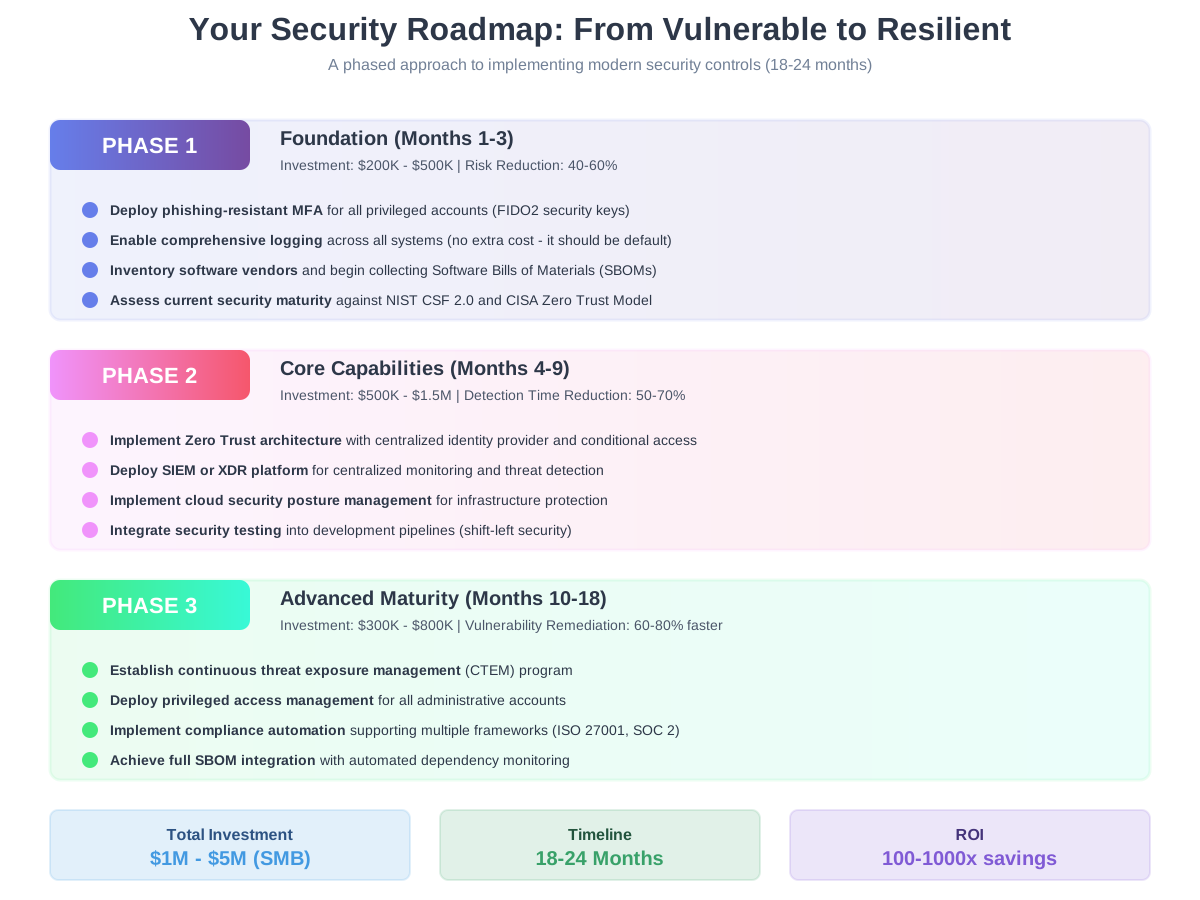
The incidents we’ve discussed share common threads—and those threads reveal clear action items. Here’s what actually works, based on which controls would have prevented these breaches:
Start with the Foundation (Do This First)
1. Deploy Phishing-Resistant Multi-Factor Authentication
Not SMS codes. Not authenticator apps. FIDO2-compliant security keys or passkeys. Microsoft, CISA, and NSA all recommend this as essential. Cost is modest—$20-50 per user for hardware keys. Protection rate? 99.9% against account compromise.
Make it mandatory, not optional. Every major breach involved missing or bypassed MFA. Start with privileged accounts, then expand to all users within 90 days.
2. Fix Your Help Desk Security
MGM’s $100 million loss from a 10-minute phone call demonstrates the cost of inadequate verification. Implement strict identity verification before any password or MFA resets. Record all interactions. Require multiple verification forms for privileged account changes. Establish separate, manager-approved processes for high-risk resets.
The cost? Negligible compared to breach costs. Some new procedures and training. That’s it.
3. Enable Comprehensive Logging
As a default feature, at no additional cost. CISA’s Secure by Design principles emphasize that essential security capabilities must be included at no extra cost. Enable logging on all systems with minimum 12-month retention. Aggregate logs centrally. Deploy automated analysis.
Without logs, you’re blind to breaches until customers call complaining about fraud.
Build Core Capabilities
4. Implement Zero Trust Architecture
Adopt CISA’s Zero Trust Maturity Model as your roadmap. Move from perimeter-based security to identity-centric verification where every access request is authenticated and authorized regardless of location. According to Microsoft research, Zero Trust reduces breach impact by 50%.
5. Get Serious About Vendor Security
With third-party breaches doubling, you cannot assume vendor security is adequate. Implement tiered risk assessments based on data sensitivity. Require certifications like ISO 27001 or SOC 2 Type II. Include right-to-audit clauses in contracts. Monitor vendor security posture continuously.
The MOVEit breach showed how one vulnerable product compromises thousands of downstream customers.
6. Know What’s In Your Software
Deploy Software Bill of Materials for all assets and continuously monitor components against vulnerability databases. Following SolarWinds and Log4j, you must know what’s in your software to respond rapidly when vulnerabilities emerge.
Require SBOMs in standard formats from all vendors. Deploy automated generation for internal software. This reduces vulnerability identification time from weeks to hours.
Achieve Advanced Maturity
7. Upgrade Identity Verification for AI Threats
Traditional biometric verification is now insufficient against AI-generated deepfakes. Deploy AI-powered fraud detection. Implement direct-from-source data verification. Add behavioral biometrics. Require trained staff video calls for high-risk transactions.
With 42.5% of fraud attempts now using AI, and projected losses of $40 billion by 2027, this upgrade is urgent.
8. Patch Critical Vulnerabilities Fast
Target 48 hours for internet-facing systems and those in CISA’s Known Exploited Vulnerabilities Catalog. Salt Typhoon exploited known vulnerabilities that remained unpatched. MOVEit attackers moved within hours of disclosure.
The average organization takes 55 days to remediate 50% of critical vulnerabilities. This speed gap enables attackers.
The Investment Reality
Let’s talk numbers, because executives need to understand both costs and returns.
For small to medium organizations (under 5,000 employees): Expect total investment of $1-5 million over 18-24 months to reach advanced maturity. Large enterprises will invest $5-20 million or more depending on scale.
But here’s the ROI that matters: Prevention typically costs 100-1000x less than breach costs.
- MGM spent $100 million on a breach that ~$50K in help desk procedures could have prevented
- Change Healthcare’s $2.46 billion in costs dwarfs MFA investment
- 23andMe and National Public Data filed for bankruptcy—the ultimate business consequence
You don’t need to reach optimal maturity immediately. But you must start now with foundational controls that provide immediate risk reduction.
The Uncomfortable Conclusion
Here’s what keeps me up at night, and what should concern every business leader: The fundamental security mechanisms we’ve relied on for decades are demonstrably insufficient.
Traditional perimeter security, implicit trust in signed software, password-based authentication—attackers have systematically defeated each trust mechanism. Organizations that continue treating these as sufficient will join the growing list of breached companies. Or worse, bankrupt ones.
The window for proactive defense is closing. Attackers are rapidly adopting AI tools, refining supply chain attack techniques, and systematically exploiting trust mechanisms that organizations depend on.
When Change Healthcare was breached, 74% of U.S. hospitals were operationally impacted. When Snowflake customers were compromised, 560 million Ticketmaster customers had data exposed. When Salt Typhoon infiltrated telecom providers, national security was compromised.
Security failures cascade beyond your organization to customers, partners, and entire industries.
Your Move
The evidence is clear. The path forward is proven. And the time to act is now.
Organizations that implement modern security controls in 2025 will maintain customer trust, competitive advantage, and business continuity. Those that delay will learn these lessons through painful, expensive breaches—if they survive them at all.
The question isn’t whether trust will fail. It’s whether you’ll be ready when it does.
What’s your organization doing to address these trust failures? Have you experienced any of these challenges firsthand? Share your thoughts in the comments below.
Need Help Getting Started?
If you’re feeling overwhelmed by where to begin, you’re not alone. Implementing these controls systematically—and in the right order—makes the difference between success and expensive mistakes.
Consider:
- Conducting a security maturity assessment against NIST CSF 2.0
- Developing a phased implementation roadmap
- Identifying quick wins that provide immediate risk reduction
Contact us to discuss your security roadmap →