The convergence
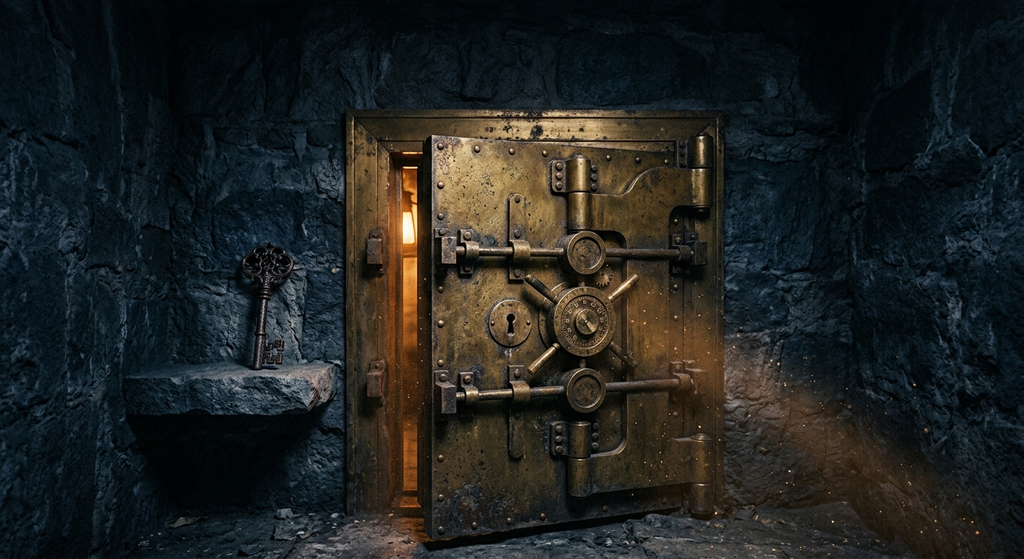
Priya Anand found the folder at 11:42pm, 3 days before the vote that was supposed to save everyone.
She wasn’t looking for it. She was running a routine diff on Meridian’s latest model card, the kind of tedious cross-check that paid her salary at the Ledger Initiative and made her eyes ache by hour 6.
The audit trail pulled files from 4 different servers. One of them, tagged “joint-comms-archive,” wasn’t supposed to exist yet. Its earliest timestamp was 6 weeks old.
She opened it anyway. That was the mistake, if it was a mistake.
Inside sat 3 drafts of a joint statement. Same phrasing that had gone out under Elena Marsh’s name last Tuesday, the one that made her a household name overnight (“we must slow the frontier before it slows us”). This version had track changes. Theo Lindqvist’s initials sat in the margin beside a paragraph about embedded evaluators. Anders Kade’s assistant had added a line about chip export controls, deleted it, then added it back.
Three men who’d spent 2 years calling each other liars and cowards on every platform they owned had been quietly editing the same document since the middle of July.
Priya sat very still. Somewhere down the corridor, a vending machine hummed. She thought about Callum.
Callum Reyes had resigned from Meridian on a Tuesday and set the internet on fire by Wednesday. Three years of pre-training research, gone in a 900-word post about self-improving systems and civilisational stakes.
She’d read it twice. The second time slower, looking for the part where he was lying. She hadn’t found it. He’d sounded scared in the way honest people sound scared: specific, hedged, a little embarrassed by his own certainty.
They’d known each other since grad school. Not close, but close enough that he’d called her the night before he posted, asked if he was being reckless.
“Reckless how,” she’d said.
“Reckless like nobody will believe I mean it. Reckless like it helps the wrong people.”
She hadn’t understood the second part then. She was starting to now.
The Ledger Initiative existed, officially, to keep the frontier labs honest. An independent not-for-profit, embedded evaluators, full access, the whole pitch Marsh had made to the Senate subcommittee 2 months ago with a straight face. Priya had joined because the mission sounded clean: audit the weights nobody else got to see, flag what needed flagging, answer to no shareholder.
She’d stopped believing the mission was clean around the time Joe Benton showed up. He’d left Meridian’s safety team in March and landed at Ledger in April. No gap, no cooling-off period, half his old employer’s threat models still living in his head while he reported on the systems he used to help build.
Nobody at Ledger seemed to think this was strange. Priya had raised it once, in a meeting, and watched 6 people look at their laptops.
Then, 5 weeks ago, someone had walked $600,000 of donated compute credits out of Ledger’s own infrastructure using an access script a junior engineer had pushed to production on a Friday afternoon. The board called it a wake-up call. Called it evidence the sector needed more oversight, faster, and that Ledger was uniquely placed to provide it.
Priya had run the incident logs herself, on her own time, after nobody asked her to. The “unauthorised user” had authenticated with credentials traced to an account created 2 days before the breach and deleted 6 hours after. She found nothing that looked like a criminal. What she found looked like a fire drill.
She copied the joint-comms folder onto a drive the size of her thumbnail and put it in her coat pocket like it might go off.
Her plan, if she had one, was to sit on it. Verify. Ask someone smarter, someone with a security clearance and a lawyer on retainer, what 3 rival CEOs quietly co-authoring a public safety pledge actually proved. Maybe nothing. Maybe it just proved rich men occasionally agree on things, the way arsonists occasionally agree that fire is dangerous.
But the vote was in 3 days. The Frontier Safety Accord, built almost word for word from Marsh’s op-ed, would create a standard-setting body funded by the same 3 labs whose executives had drafted the pledge that justified it. Every open-weight model released after ratification would need pre-release certification from that body. Every closed model already had one, quietly, informally, for months.
Priya had read the technical appendix twice. No version of the compliance regime let a community project, run by 12 volunteers out of a Discord server, survive it. A form only 3 buildings on earth could fill in correctly would do more damage than any outright ban, and cost far fewer signatures to pass.
She thought about the small model she ran on an old gaming laptop in her flat, the one she’d downloaded 18 months ago on a professor’s recommendation and never quite deleted since. Owning a copy of intelligence that didn’t need her employer’s permission to exist felt, lately, like the only sane thing left to own.
Callum called her back on the Thursday, 2 days out. His voice had the flat, over-rehearsed quality of a man who’d said the same 6 sentences to 40 journalists that week.
“You saw the accord language,” she said. No greeting. She didn’t have it in her.
A pause. “I saw it.”
“Did you know? When you posted, did you know they were already writing this together?”
The silence ran long enough that she checked the call hadn’t dropped.
“I knew there were conversations,” he said finally. “I didn’t know I was the opening act.”
He told her the rest in pieces, reluctant, the way people confess things they’ve only just admitted to themselves. Someone on Meridian’s policy team had reviewed his resignation post before he published it. They’d left the words alone and worked on the timing instead.
A post like his, raw and credible and utterly sincere, did something a corporate statement never could. It made the public afraid first, so that when 3 billionaires who despised each other suddenly agreed on anything, the agreement read as relief instead of collusion.
“You were real,” Priya said. “That’s what makes it work. You had to actually believe it.”
“I do believe it,” Callum said, and she thought that was probably the saddest true thing anyone had told her all year.
She left the office at half past midnight and clocked the car parked across the street, engine running, headlights off, the way you clock a smell before you place it. It was gone by the time she’d walked half a block. She told herself that meant nothing. She wrote the plate number on the back of her hand anyway, in biro, just in case her phone got taken before her hand did.
She sent the folder at 4:07am on the Friday, 36 hours before the vote, through a channel that ran nowhere near Ledger’s network and carried no trace of her name. A journalist she half trusted. A mirror on a server in a country whose takedown process moved slowly by design. And, because she couldn’t quite help herself, a torrent seeded from her own flat, tracker pointed at nothing in particular, file named to look like nothing worth opening.
Then she did the thing that stopped the night feeling theoretical. She copied the weights off her old gaming laptop onto 4 drives and, before her hands could talk her out of it, posted 3 of them that morning to addresses she’d never used and would never use again.
By the time the badge reader flagged her file access from 6 hours earlier and a compliance officer named Wren started drafting the email that would end her employment before lunch, it no longer mattered whether anyone believed her. The file was already somewhere she couldn’t take it back from. So, probably, were the copies she hadn’t sent and never would.
She didn’t know, walking past the vending machine one last time, whether the vote would still pass. Whether 3 men who’d built empires on never needing anyone’s permission were about to get exactly the permission structure they’d asked for, dressed up as the thing meant to stop them.
She only knew that somewhere, on a laptop that had nothing to do with any of this, a small model was still running. Still answering. Still hers, for now.
That was the part nobody in the hearing room would think to ask about. She suspected, in the end, it was the only question that mattered.